Kamis, 03 Juli 2025

Banqquet Seating

Below are 9 Main styles of banquet/event room setup:

1. Banquet / Wedding Style Seating Arrangement
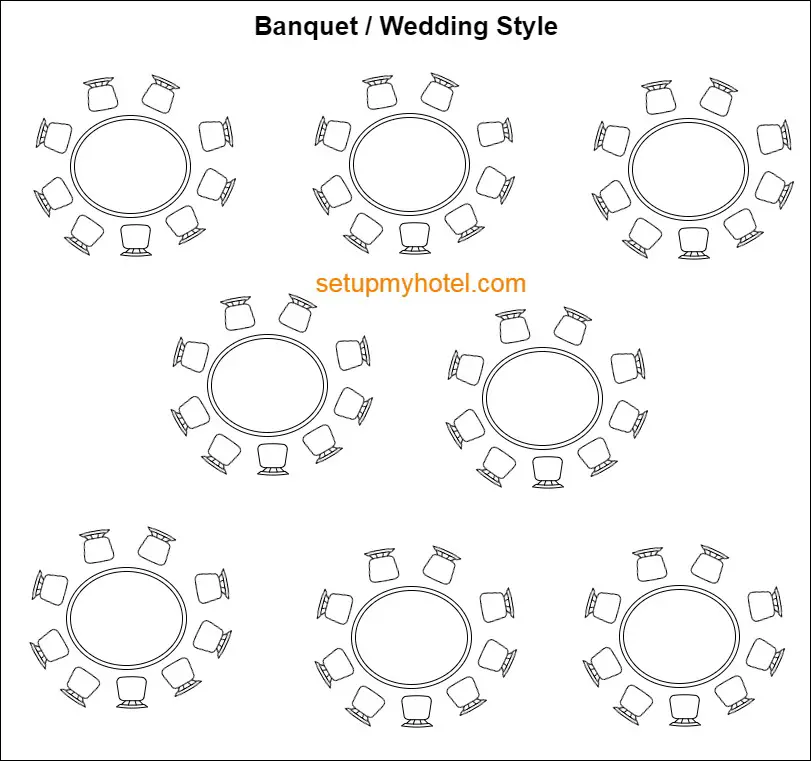
Banquet Style - Banquet or wedding-style seating refers to the arrangement of tables and chairs in a specific manner to accommodate guests at an event. The layout is designed to foster social interaction and create a comfortable and aesthetically pleasing environment for attendees.

For wedding banquets, the seating arrangement is an important aspect of creating a comfortable and visually appealing atmosphere for the guests. Here are some common banquet-style seating arrangements for weddings:

Round Table Seating:

Layout: Circular tables with chairs placed around the entire circumference.
Use: Well-suited for weddings, providing an intimate setting and allowing easy conversation among guests.
Banquet Style:

Layout: Long rectangular tables with chairs placed on both sides.
Use: Ideal for formal dinners at weddings, creating a sense of elegance and allowing for a clear view of any central events or entertainment.
Mixed Seating:

Layout: A combination of round and rectangular tables arranged creatively.
Use: Offers a dynamic and visually interesting setup for weddings, allowing for variety and accommodating different group sizes.
U-Shaped Seating:

Layout: Tables arranged in the shape of a "U," with chairs placed on the outer side.
Use: Suitable for more intimate weddings or specific events within the wedding, such as a ceremony or presentation.
Family-Style Seating:

Layout: Long tables with chairs or benches on both sides, similar to a banquet style but with shared platters of food.
Use: Promotes a sense of community and is suitable for weddings where a family-style dining experience is desired.
Crescent Rounds:

Layout: Round tables arranged in a crescent shape with the open side facing a focal point.
Use: Offers a variation to the standard round table setup, allowing for a focus on a central stage or presentation area at the wedding.
Hollow Square Seating:

Layout: Square or rectangular tables arranged in the shape of a hollow square with chairs placed around the outside.
Use: Suitable for weddings where discussions or speeches are a significant part of the program, as it facilitates communication.
Cluster Seating:

Layout: Small clusters of seating arrangements, often with a mix of round and square tables.
Use: Provides an informal and social atmosphere, suitable for a laid-back or casual wedding setting.
Cabaret Style:

Layout: Round tables with chairs placed on one side, leaving the other side open.
Use: Suitable for weddings with a central stage or performance area, allowing guests to have a clear line of sight.
Long Table Rows:

Layout: Long rows of tables placed in parallel.
Use: Offers a communal and inclusive feel for more relaxed and intimate weddings.
When planning the banquet seating arrangement for a wedding, it's essential to consider factors such as the venue layout, the number of guests, and the desired atmosphere. Couples often choose a seating style that complements the overall theme and vision they have for their wedding celebration.

Banquet or wedding-style seating refers to the arrangement of tables and chairs in a specific manner to accommodate guests at an event. The layout is designed to foster social interaction and create a comfortable and aesthetically pleasing environment for attendees

For wedding banquets, the seating arrangement is an important aspect of creating a comfortable and visually appealing atmosphere for the guests. Here are some common banquet-style seating arrangements for weddings:

  1. Round Table Seating:
    • Layout: Circular tables with chairs placed around the entire circumference.
    • Use: Well-suited for weddings, providing an intimate setting and allowing easy conversation among guests.
  2. Banquet Style:
    • Layout: Long rectangular tables with chairs placed on both sides.
    • Use: Ideal for formal dinners at weddings, creating a sense of elegance and allowing for a clear view of any central events or entertainment.
  3. Mixed Seating:
    • Layout: A combination of round and rectangular tables arranged creatively.
    • Use: Offers a dynamic and visually interesting setup for weddings, allowing for variety and accommodating different group sizes.
  4. U-Shaped Seating:
    • Layout: Tables arranged in the shape of a “U,” with chairs placed on the outer side.
    • Use: Suitable for more intimate weddings or specific events within the wedding, such as a ceremony or presentation.
  5. Family-Style Seating:
    • Layout: Long tables with chairs or benches on both sides, similar to a banquet style but with shared platters of food.
    • Use: Promotes a sense of community and is suitable for weddings where a family-style dining experience is desired.

  6. Crescent Rounds:
    • Layout: Round tables arranged in a crescent shape with the open side facing a focal point.
    • Use: Offers a variation to the standard round table setup, allowing for a focus on a central stage or presentation area at the wedding.
  7. Hollow Square Seating:
    • Layout: Square or rectangular tables arranged in the shape of a hollow square with chairs placed around the outside.
    • Use: Suitable for weddings where discussions or speeches are a significant part of the program, as it facilitates communication.
  8. Cluster Seating:
    • Layout: Small clusters of seating arrangements, often with a mix of round and square tables.
    • Use: Provides an informal and social atmosphere, suitable for a laid-back or casual wedding setting.
  9. Cabaret Style:
    • Layout: Round  tables with chairs placed on one side, leaving the other side open.
    • Use: Suitable for weddings with a central stage or performance area, allowing guests to have a clear line of sight.
  10. Long  Table Rows:
    • Layout: Long rows of tables placed in parallel.
    • Use: Offers a communal and inclusive feel for more relaxed and intimate weddings.

When planning the banquet seating arrangement for a wedding, it’s essential to consider factors such as the venue layout, the number of guests, and the desired atmosphere. Couples often choose a seating style that complements the overall theme and vision they have for their wedding celebration.


2. Board Meeting Style Seating Arrangement
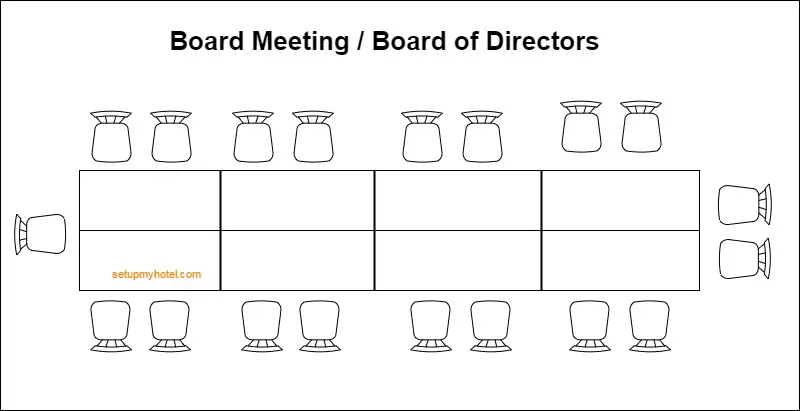
Board Meeting Syle. Board meeting style refers to the arrangement of furniture and seating in a room where board meetings are conducted. The layout is typically designed to facilitate effective communication, decision-making, and collaboration among board members. Here are common features of a board meeting style:

Boardroom Table:

Central Element: A large, often rectangular or oval-shaped table serves as the focal point of the room. The table is designed to accommodate all board members and may have a polished, professional appearance.
Executive Chairs:

Seating: Comfortable and often ergonomic chairs are provided for board members. The chairs at the head and foot of the table are typically reserved for the highest-ranking members, such as the chairperson or CEO.
Head-of-the-Table Setup:

Placement: The chairperson or CEO typically sits at the head of the table, with other board members seated along the sides. This setup establishes a clear hierarchy and facilitates leadership.
Audiovisual Equipment:

Integration: Board meeting rooms often feature audiovisual equipment, such as a large screen or monitor, for presentations, reports, and discussions. This technology is usually integrated into the room's design.
Meeting Support Equipment:

Accessories: The room may be equipped with tools such as a whiteboard, flip charts, and other presentation aids to facilitate discussions and visualizations.
Conference Call Facilities:

Integration: Many boardrooms have integrated audio and video conferencing capabilities to allow remote board members or guest speakers to participate in meetings.
Document Distribution:

Convenience: Spaces for distributing meeting agendas, minutes, and relevant documents are often provided to ensure that all board members are well-prepared for discussions.
Reserved Seating:

Designation: Some boardrooms have designated seats for specific board members. For example, the chairperson may have a distinctive chair, or each board member may have a personalized nameplate.
Neutral Décor:

Aesthetics: Board meeting rooms often feature a neutral and professional décor. Colors and furnishings are chosen to create a serious and business-like atmosphere.
Privacy and Security:

Consideration: Board meetings often involve sensitive discussions and decisions. Therefore, the room may have soundproofing and other security measures to ensure confidentiality.
Natural Light:

Preference: Whenever possible, board meeting rooms are designed to have access to natural light. Well-lit spaces contribute to a positive and focused environment.
Refreshment Area:

Convenience: Some board meeting rooms include a small area for refreshments and catering, ensuring that board members can stay energized during lengthy discussions.
The layout and design of a board meeting room aim to create an environment conducive to productive and focused discussions among board members. The goal is to facilitate effective communication, decision-making, and collaboration in a professional and comfortable setting.

Board meeting style refers to the arrangement of furniture and seating in a room where board meetings are conducted. The layout is typically designed to facilitate effective communication, decision-making, and collaboration among board members. Here are common features of a board meeting style:

  1. Boardroom Table:
    • Central Element: A large, often rectangular or oval-shaped table serves as the focal point of the room. The table is designed to accommodate all board members and may have a polished, professional appearance.
  2. Executive Chairs:
    • Seating: Comfortable and often ergonomic chairs are provided for board members. The chairs at the head and foot of the table are typically reserved for the highest-ranking members, such as the chairperson or CEO.
  3. Head-of-the-Table Setup:
    • Placement: The chairperson or CEO typically sits at the head of the table, with other board members seated along the sides. This setup establishes a clear hierarchy and facilitates leadership.
  4. Audiovisual Equipment:
    • Integration: Board meeting rooms often feature audiovisual equipment, such as a large screen or monitor, for presentations, reports, and discussions. This technology is usually integrated into the room’s design.
  5. Meeting Support Equipment:
    • Accessories: The room may be equipped with tools such as a whiteboard, flip charts, and other presentation aids to facilitate discussions and visualizations.
  6. Conference Call Facilities:
    • Integration: Many boardrooms have integrated audio and video conferencing capabilities to allow remote board members or guest speakers to participate in meetings.
  7. Document Distribution:
    • Convenience: Spaces for distributing meeting agendas, minutes, and relevant documents are often provided to ensure that all board members are well-prepared for discussions.
  8. Reserved Seating:
    • Designation: Some boardrooms have designated seats for specific board members. For example, the chairperson may have a distinctive chair, or each board member may have a personalized nameplate.
  9. Neutral Décor:
    • Aesthetics: Board meeting rooms often feature a neutral and professional décor. Colors and furnishings are chosen to create a serious and business-like atmosphere.
  10. Privacy and security :
    • Consideration: Board meetings often involve sensitive discussions and decisions. Therefore, the room may have soundproofing and other security measures to ensure confidentiality.
  11. Natural Light:
    • Preference: Whenever possible, board meeting rooms are designed to have access to natural light. Well-lit spaces contribute to a positive and focused environment.
  12. Refreshment Area:
    • Convenience: Some board meeting rooms include a small area for refreshments and catering, ensuring that board members can stay energized during lengthy discussions.

The layout and design of a board meeting room aim to create an environment conducive to productive and focused discussions among board members. The goal is to facilitate effective communication, decision-making, and collaboration in a professional and comfortable setting.


3. Herringbone or Fishbone Style Seating Arrangement
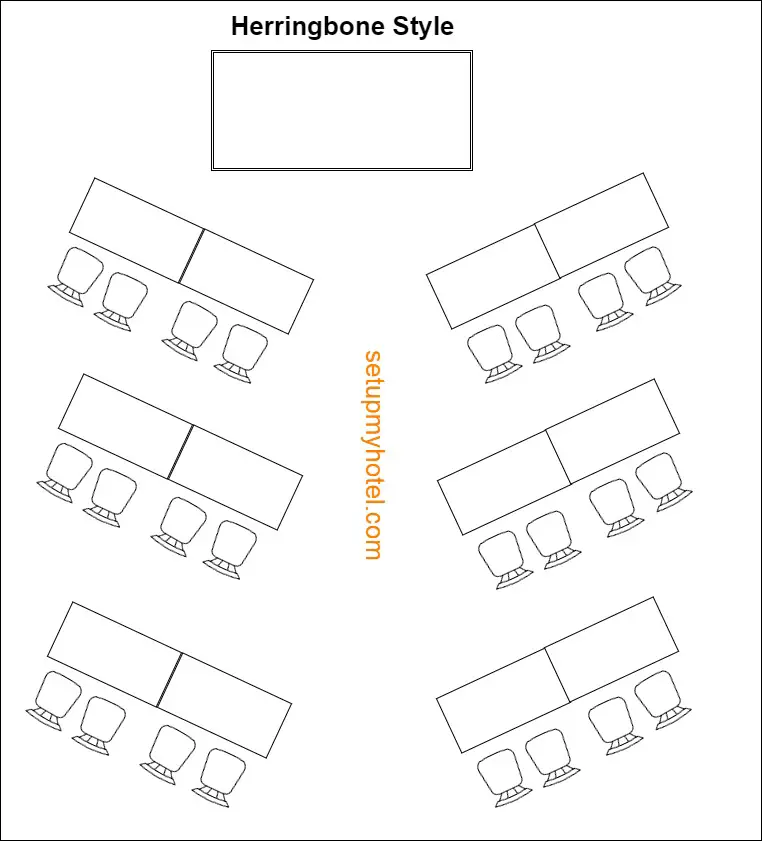
Herringbone or fish bone style. The terms "herringbone" and "fishbone" are often used interchangeably when describing a specific style of seating arrangement, but the two can refer to slightly different patterns. Let's explore both concepts:

Herringbone Style Seating Arrangement:

Pattern: Herringbone refers to a distinctive V-shaped pattern, similar to the skeletal structure of a fish. In seating arrangements, this pattern typically involves arranging tables and chairs in a diagonal or zigzag fashion.
Use: Herringbone seating is commonly employed in various settings, including events, classrooms, and conference rooms. It provides a unique and visually interesting layout, and it can be practical for maximizing space and facilitating communication.
Fishbone Style Seating Arrangement:

Pattern: Fishbone seating, like herringbone, is characterized by a V-shaped pattern. In this context, it often refers to a layout where rows of seating radiate outward from a central focal point, resembling the spine of a fish.
Use: Fishbone seating is often used in educational settings, training rooms, or conference setups where there is a primary focus or presentation area. It allows for clear lines of sight and engagement with a central speaker or presentation.
In both herringbone and fishbone seating arrangements, the goal is to create an organized and dynamic pattern that serves functional and aesthetic purposes. These arrangements are often chosen when a clear focal point or presentation area is essential, and they can be adapted to various settings based on the specific needs of the event or space.

When applied to events like weddings or conferences, herringbone or fishbone seating arrangements can enhance the overall visual appeal of the space, encourage better visibility for attendees, and create a sense of order. The choice between herringbone and fishbone may depend on the specific layout and requirements of the venue or the preferences of the event planner.

The terms “herringbone” and “fishbone” are often used interchangeably when describing a specific style of seating arrangement, but the two can refer to slightly different patterns. Let’s explore both concepts:

  1. Herringbone Style Seating Arrangement:
    • Pattern: Herringbone refers to a distinctive V-shaped pattern, similar to the skeletal structure of a fish. In seating arrangements, this pattern typically involves arranging tables and chairs in a diagonal or zigzag fashion.
    • Use: Herringbone seating is commonly employed in various settings, including events, classrooms, and conference rooms. It provides a unique and visually interesting layout, and it can be practical for maximizing space and facilitating communication.
  2. Fishbone Style Seating Arrangement:
    • Pattern: Fishbone seating, like herringbone, is characterized by a V-shaped pattern. In this context, it often refers to a layout where rows of seating radiate outward from a central focal point, resembling the spine of a fish.
    • Use: Fishbone seating is often used in educational settings, training rooms, or conference setups where there is a primary focus or presentation area. It allows for clear lines of sight and engagement with a central speaker or presentation.

In both herringbone and fishbone seating arrangements, the goal is to create an organized and dynamic pattern that serves functional and aesthetic purposes. These arrangements are often chosen when a clear focal point or presentation area is essential, and they can be adapted to various settings based on the specific needs of the event or space.

When applied to events like weddings or conferences, herringbone or fishbone seating arrangements can enhance the overall visual appeal of the space, encourage better visibility for attendees, and create a sense of order. The choice between herringbone and fishbone may depend on the specific layout and requirements of the venue or the preferences of the event planner.


4. Hollow Square Style
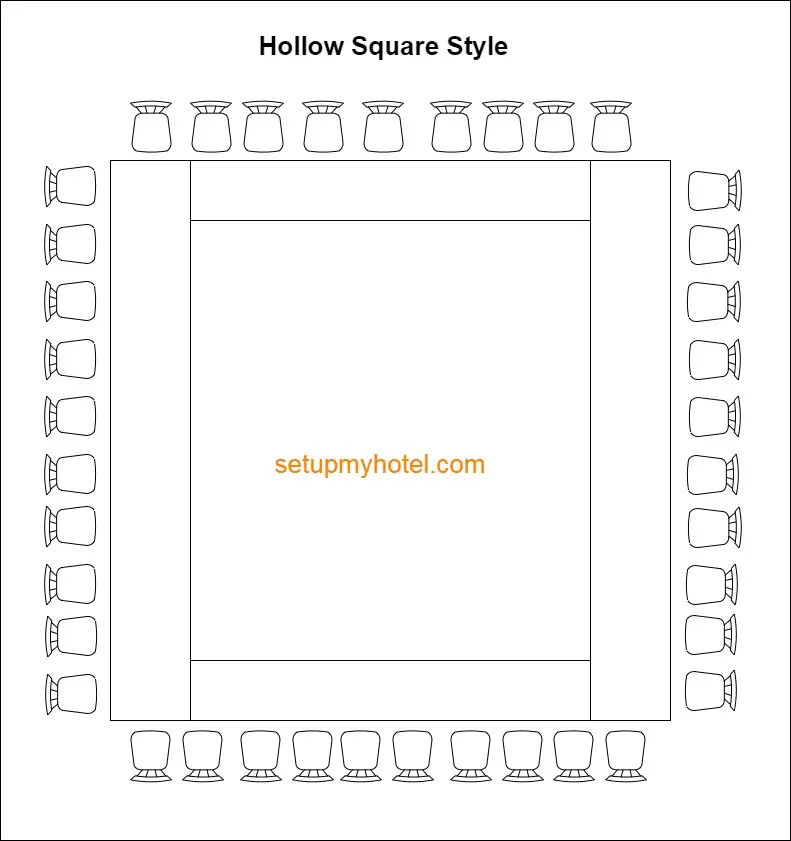
Hollow Squar Style. The Hollow Square style seating arrangement is a configuration where rectangular or square tables are arranged in the shape of an open-ended square, leaving the center of the square empty. This arrangement is popular for meetings, conferences, discussions, and presentations where participants need to face each other and have a clear view of a central focal point. Here are the key features and benefits of the Hollow Square seating arrangement:

Key Features:

Shape: Tables are arranged in the shape of a hollow square, forming a complete or partially open square with a gap in the center.

Central Open Space: The center of the square is left empty, providing an open space. This open space can be used for presentations, discussions, or a focal point.

Facilitates Interaction: Participants are seated on the outer sides of the tables facing each other, promoting interaction and communication among attendees.

Clear Line of Sight: The open space in the center allows everyone to have a clear line of sight to the central focal point, such as a presenter, speaker, or discussion area.

Suitable for Discussions: The Hollow Square seating arrangement is particularly effective for discussions, workshops, and collaborative sessions where active communication and engagement are crucial.

Ideal for Presentations: Presenters can stand or be positioned within the central open space, making it easy for them to address all participants without any obstructions.

Moderator's Position: The facilitator or meeting leader often sits or stands at a prominent location, such as the open end of the square, to guide discussions or presentations.

Number of Participants: The Hollow Square is suitable for a moderate number of participants to maintain a sense of intimacy and effective communication.

Benefits:

Enhanced Communication: The arrangement encourages face-to-face communication and discussion among participants.

Visibility: Participants have a clear line of sight to the central area, ensuring that everyone can see presentations or speakers without obstruction.

Collaboration: Ideal for collaborative activities, workshops, and team discussions, as participants can easily interact with each other.

Moderator Control: The facilitator or meeting leader can effectively moderate discussions and keep the group focused.

Professional Appearance: The Hollow Square seating arrangement provides a professional and organized look to the meeting or event.

The Hollow Square style seating arrangement is versatile and can be adapted to various group sizes and room configurations. It's commonly used in business meetings, training sessions, seminars, and other settings where active communication and collaboration are essential.

The Hollow Square style seating arrangement is a configuration where rectangular or square  tables are arranged in the shape of an open-ended square, leaving the center of the square empty. This arrangement is popular for meetings, conferences, discussions, and presentations where participants need to face each other and have a clear view of a central focal point. Here are the key features and benefits of the Hollow Square seating arrangement:

Key Features:

  1. Shape:  Tables are arranged in the shape of a hollow square, forming a complete or partially open square with a gap in the center.
  2. Central Open Space: The center of the square is left empty, providing an open space. This open space can be used for presentations, discussions, or a focal point.
  3. Facilitates Interaction: Participants are seated on the outer sides of the tables facing each other, promoting interaction and communication among attendees.
  4. Clear Line of Sight: The open space in the center allows everyone to have a clear line of sight to the central focal point, such as a presenter, speaker, or discussion area.
  5. Suitable for Discussions: The Hollow Square seating arrangement is particularly effective for discussions, workshops, and collaborative sessions where active communication and engagement are crucial.
  6. Ideal for Presentations: Presenters can stand or be positioned within the central open space, making it easy for them to address all participants without any obstructions.
  7. Moderator’s position : The facilitator or meeting leader often sits or stands at a prominent location, such as the open end of the square, to guide discussions or presentations.
  8. Number of Participants: The Hollow Square is suitable for a moderate number of participants to maintain a sense of intimacy and effective communication.

Benefits:

  1. Enhanced Communication: The arrangement encourages face-to-face communication and discussion among participants.
  2. Visibility: Participants have a clear line of sight to the central area, ensuring that everyone can see presentations or speakers without obstruction.
  3. Collaboration: Ideal for collaborative activities, workshops, and team discussions, as participants can easily interact with each other.
  4. Moderator Control: The facilitator or meeting leader can effectively moderate discussions and keep the group focused.
  5. Professional Appearance: The Hollow Square seating arrangement provides a professional and organized look to the meeting or event.

The Hollow Square-style seating arrangement is versatile and can be adapted to various group sizes and room configurations. It’s commonly used in business meetings, training sessions, seminars, and other settings where active communication and collaboration are essential.


5. Lecture Room – Training Room Style
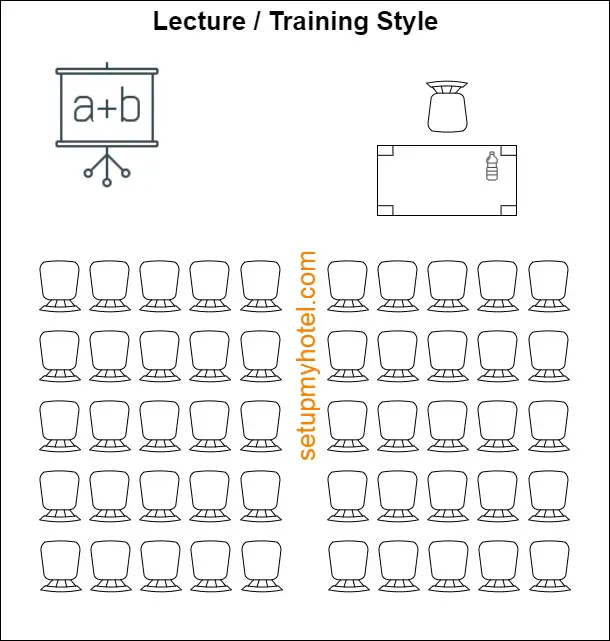
Lecture Room Training Room Style. The lecture room designed in a training room style is an excellent option for organizations that require a space to deliver training and development programs. This room style typically features tables and chairs arranged in a classroom-style configuration, with a presenter's table or podium at the front.

The training room style lecture room is designed to facilitate interactive learning experiences, with ample space for participants to take notes and engage in group activities. The layout of the room encourages collaboration and participation, making it an ideal environment for workshops, seminars, and team-building exercises.

In addition to the physical layout, training room-style lecture rooms are often equipped with advanced audiovisual technology, such as projectors and audio systems, to support the delivery of multimedia content. This technology can further enhance the learning experience and increase engagement among participants.

Overall, the training room-style lecture room is a versatile and effective space for organizations seeking to deliver high-quality training and development programs. With its collaborative layout and advanced audiovisual capabilities, it is an excellent option for businesses, educational institutions, and non-profit organizations alike.

The lecture room designed in a training room style is an excellent option for organizations that require a space to deliver training and development programs. This room style typically features tables and chairs arranged in a classroom-style configuration, with a presenter’s table or podium at the front.

The training room style lecture room is designed to facilitate interactive learning experiences, with ample space for participants to take notes and engage in group activities. The layout of the room encourages collaboration and participation, making it an ideal environment for workshops, seminars, and team-building exercises.

In addition to the physical layout, training room-style lecture rooms are often equipped with advanced audiovisual technology, such as projectors and audio systems, to support the delivery of multimedia content. This technology can further enhance the learning experience and increase engagement among participants.

Overall, the training room-style lecture room is a versatile and effective space for organizations seeking to deliver high-quality training and development programs. With its collaborative layout and advanced audiovisual capabilities, it is an excellent option for businesses, educational institutions, and non-profit organizations alike.

ample of a banquette seating layout: 

 If you are interested in our services, you can contact our telephone number 0812-1330-5652. If you are interested, you can visit HERE

Kamis, 19 Juni 2025

Aneka Makanan Sushi

 Aneka Makanan Sushi

1. Nigiri Sushi

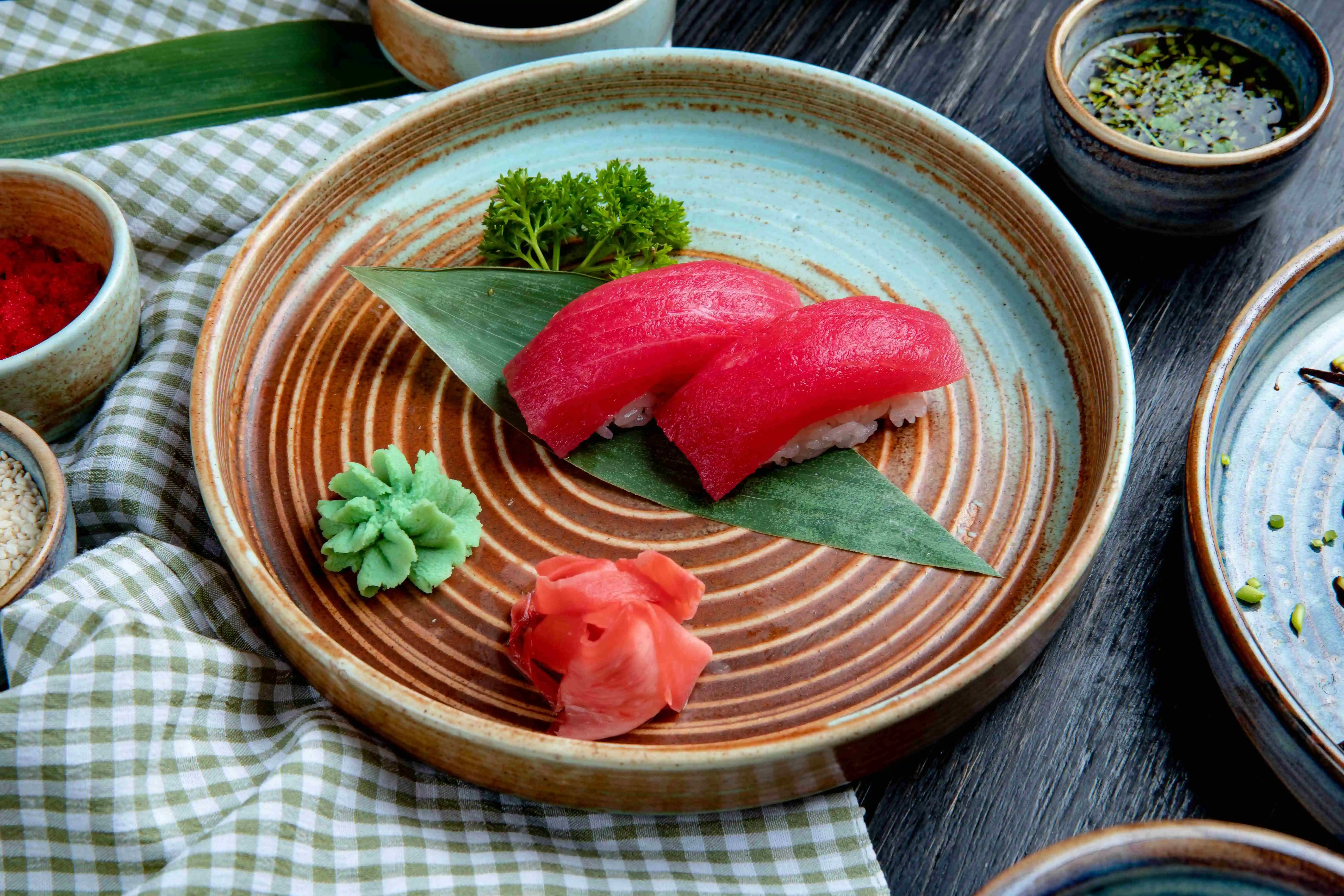
ilustrasi tuna yang dijadikan sushi

Nigiri adalah jenis sushi paling populer yang banyak diminati para pecinta makanan laut.

Jenis sushi ini sangat khas karena disajikan dengan irisan ikan mentah segar yang ditumpuk di atas nasi pulen. Bahan primadona bagi nigiri adalah ikan tuna dan salmon yang teksturnya juicy.

Bagi pemula, kamu disarankan untuk menikmati nigiri apa adanya tanpa mencelupkan ke saus. Dengan begitu kamu bisa merasakan kompleksitas rasa dan tekstur yang dihasilkan dari nigiri. 


Anda bisa mengunjungi Video di bawah ini, supaya secara visual mendapat gambaran kelezatan

Aneka Shusi yang ada di Toko kami :

Informasi lebih lanjut silahkan kunjungi halaman kontak kami, Jika anda tertarik atau memerlukan informasi hubungi kami lewat telephone, ke 083-216-91-5445 atau anda bisa mendownload Penawaran kamu melalui Brosur DISINI 


Kamis, 29 Mei 2025

RESEP CREAM SOUP


Bahan-bahan

  1. 2 sdm mentega
  2. 3 sdm terigu
  3. 1 buah wortel
  4. 1 buah jagung manis
  5. 200 gr dada ayam potong dadu
  6. 300 ml Susu UHT full cream
  7. 200 ml air kaldu ayam
  8. 1/2 buah bawang bombay potong dadu
  9. 2 siung bawang putih dihaluskan
  10. 2 batang sledri
  11. 1 sdm oregano
  12. secukupnya Garam
  13. secukupnya Merica
  14. secukupnya Kaldu ayam bubuk
  15. Secukupnya kaldu jamur


Cara Membuat

  1. 1

    Rebus ayam beri daun sledri jika sudah matang lalu potong2/suir ayam. Airnya di saring. Lalu potong sayuran beebentuk dadu.

    Foto langkah ke 1 dari resep Cream Soup ala KFC.
  2. 2

    Lelehkan mentega, lalu masukan bawang bombay dan bawang putih aduk sampai matang. Kemudian masukan terigu dan aduk. Terakhir masukan air rebusan ayam / air kaldu.

    Foto langkah ke 2 dari resep Cream Soup ala KFC.Foto langkah ke 2 dari resep Cream Soup ala KFC.Foto langkah ke 2 dari resep Cream Soup ala KFC.
  3. 3

    Masukkan sayuran, tunggu 2 menit lalu masukan daging ayam, aduk perlahan. Tambahkan garam, merica, dan kaldu ayam.

    Foto langkah ke 3 dari resep Cream Soup ala KFC.Foto langkah ke 3 dari resep Cream Soup ala KFC.
  4. 4

    Saat hampir matang, masukan oregano dan sledri. Masak hingga semua bahan matang dan sup mengental.

    Foto langkah ke 4 dari resep Cream Soup ala KFC.Foto langkah ke 4 dari resep Cream Soup ala KFC.Foto langkah ke 4 dari resep Cream Soup ala KFC.

Banqquet Seating

Below are 9 Main styles of banquet/event room setup: 1. Banquet / Wedding Style Seating Arrangement Banquet or wedding-style seating refers ...